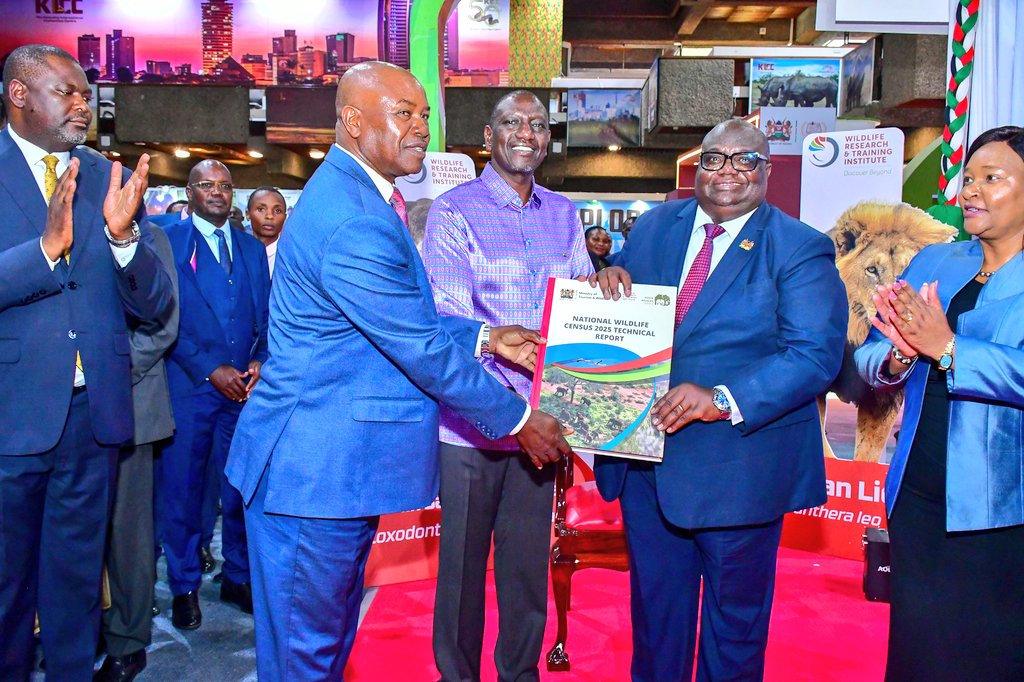
President William Ruto (C) and Dr. Patrick Omondi, (R) Director of the Wildlife Research and Training Institute during the launch of the official release of the National Wildlife Census 2025 Report on December 12, 2025
In Summary
According to the census report, the elephant population has made one of its biggest jumps in recent years, rising to 41,952 from 36,280 recorded in 2021. Officials say the growth reflects improved anti-poaching operations and better protection of natural habitats.
A new national wildlife census covering June 2024 to August 2025 has revealed strong gains for some wildlife species while exposing worrying declines among others, offering a detailed look at the state of conservation in the country.
The findings show major progress in protecting elephants and rhinos, even as rare species such as the hirola continue to face severe threats.
According to the census report, the elephant population has made one of its biggest jumps in recent years, rising to 41,952 from 36,280 recorded in 2021. Officials say the growth reflects improved anti-poaching operations and better protection of natural habitats.
Giraffes have also posted notable gains, with their numbers reaching 43,002, up from 35,355. Rhinos, which remain critically endangered, have increased from 1,812 to 2,102, marking a slow but encouraging recovery.
“Some animals have increased, others have reduced,” said Wildlife Research and Training Institute CEO Dr Patrick Omondi, who noted that the changes vary sharply across different species. He added that while elephants and rhinos have shown clear improvement, concern is rising for animals already on the brink.
One of the most affected is the hirola, considered Africa’s rarest antelope, whose population now stands at only 245. Its numbers continue to shrink, putting the species at imminent risk of disappearing. “Hirola are only found in Ijara in Wajir… they have really declined…” Dr Omondi said. The endangered Grevy’s zebra has dropped to 2,465, while sable antelopes have fallen from 51 recorded in 2021 to just 40.
“We have seen a sharp rise in elephants… the rhinos have also increased, black rhino…” Dr Patrick Omondi noted, underscoring the mixed nature of the census findings.
Beyond the animal counts, the report outlines several measures needed to help secure struggling species. It recommends creating wildlife corridors between major ecosystems to ease animal movement, including linking Tsavo and Amboseli, and connecting Nairobi National Park with the Athi-Kapiti plains. The census also suggests relocating human settlements found between key parks to support free movement of wildlife.
With more cases of human–wildlife conflict emerging across the country, the report urges authorities to integrate wildlife data into national and county land-use plans.
It also proposes stronger coexistence strategies, such as stopping the construction of tourist hotels along buffalo migration routes in the Mara, to reduce disruptions and prevent further strain on vulnerable species.